
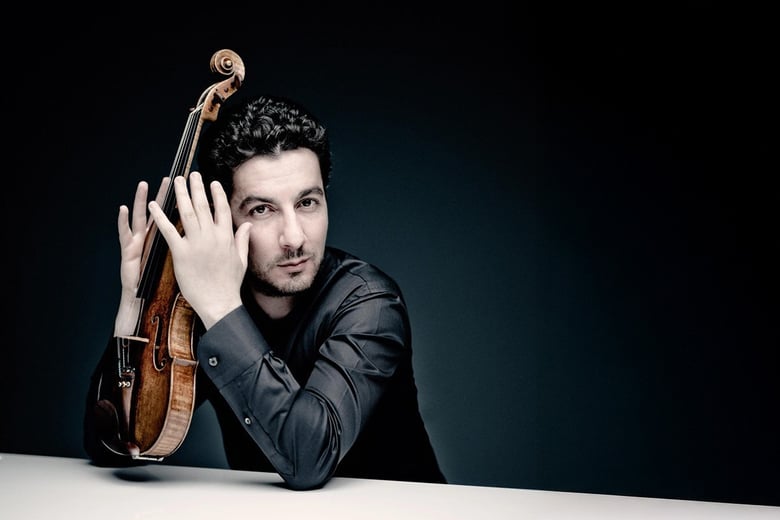
Program | Khachaturian’s Exuberant Violin Concerto
SATURDAY, OCT. 10 | 7:30PM
SUNDAY, OCT. 11 | 2PM
Jacobs Music Center
2026-27 JACOBS MASTERWORKS
KHACHATURIAN’S EXUBERANT VIOLIN CONCERTO
Rafael Payare, conductor
Sergey Khachatryan, violin
San Diego Symphony Orchestra
This performance is made possible, in part, through the generosity of the San Diego Armenian-American Community
PROGRAM
ARAM KHACHATURIAN
Violin Concerto in D Minor
Allegro con fermezza
Andante sostenuto
Allegro vivace
Sergey Khachatryan, violin
— INTERMISSION —
ANTON BRUCKNER
Symphony No. 9 in D Minor
Feierlich, Misterioso
Scherzo: Bewegt, lebhaft
Adagio: Langsam, feierlich
Total Program Duration:
2 hours
Includes one 20-minute intermission
ABOUT THE ARTISTS
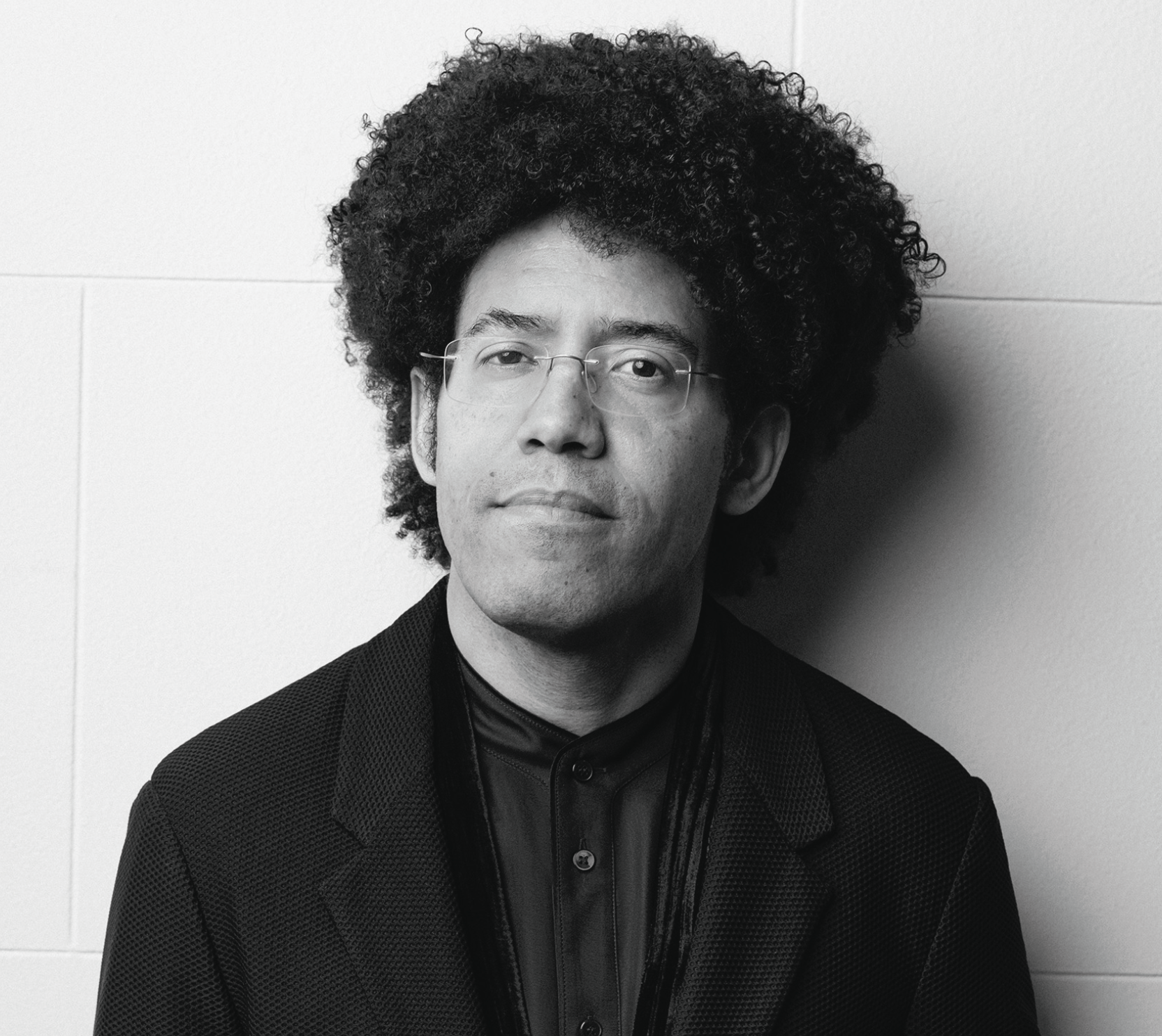
RAFAEL PAYARE
MUSIC & ARTISTIC DIRECTOR
With his charismatic energy, innate musicianship, and technical brilliance on the podium, Rafael Payare is always “electrifying in front of an orchestra” (Los Angeles Times). Since September 2019, he has been Music and Artistic Director of California’s San Diego Symphony Orchestra, where he is widely credited with inspiring “the San Diego Symphony’s splendid new sound” (Wall Street Journal).
Payare has helped usher in a bright new era for the San Diego Symphony. He and the orchestra drew international notice with the openings of The Rady Shell at Jacobs Park, their bayside open-air venue, and Jacobs Music Center, their newly renovated indoor home, where the Symphony “finally has a San Diego venue that permits it to sound like the world-class orchestra they’ve been since Payare took over” (San Diego Union-Tribune). In recent seasons, the Orchestra has presented festival programming including two weeks dedicated to Brahms, “Upright and Grand: A Tribute to the Piano,” and “It’s About Time,” a focus on percussion that included performances on both sides of the U.S.-Mexico border. Works by Brahms, Mahler, Bruckner, and Shostakovich are featured every season
with Payare. The Orchestra regularly programs new music by composers including Matthias Pintscher and Gabriela Ortiz, and recently commissioned Symphony No. 6: Monarch by San Diego Symphony composer-in-residence Jimmy López. In 2023, Payare joined Gustavo Dudamel and Esa-Pekka Salonen to launch the first California Festival,
a statewide celebration of contemporary music featuring the Los Angeles Philharmonic, San Francisco Symphony, and San Diego Symphony. On a 2026 Delos release, Payare conducts the San Diego Symphony Orchestra
in Shostakovich’s epic seventh symphony, “Leningrad,” following the success of their digital recording of the same composer’s Symphony No. 11. He also leads the Orchestra on its first European tour in 2027, with performances in Barcelona, Dublin, Hamburg, Paris, and Toulouse. Another of his key initiatives includes the San Diego Symphony Conducting Fellowship Program, conceived to cultivate the next generation of orchestral leaders.
Beyond San Diego, Payare is Music and Artistic
Director of Canada’s Orchestre symphonique de Montréal—with which he has made four Pentatone recordings and numerous appearances on
Medici.tv—and Conductor Laureate of Northern
Ireland’s Ulster Orchestra, where he previously served
as Principal Conductor and Music Director, making multiple appearances at London’s BBC Proms. Since winning first prize at Denmark’s 2012 Malko Competition for Young Conductors, he has forged relationships with many of
the world’s leading orchestras, including the Boston, Chicago, and Pittsburgh Symphonies; the Cleveland and Philadelphia Orchestras; and the Los Angeles and New York Philharmonics; the Leipzig Gewandhaus Orchestra, London Symphony Orchestra, NDR Elbphilharmonie Orchestra, Royal Concertgebouw Orchestra, Staatskapelle Berlin, Tonhalle Orchestra Zurich, and Vienna Philharmonic. He has also led productions at London’s Royal Opera House, the Glyndebourne Festival, Stockholm’s Royal Swedish Opera, and the Royal Danish Opera.
An alumnus of Venezuela’s El Sistema program, Payare founded Montreal’s El Sistema OSM. He has led youth projects with the Chicago Civic Orchestra, Orchestra of the Americas, Filarmónica Joven de Colombia, and London’s Royal College of Music, and has conducted the National Youth Orchestra of Ireland on tour and lead NYO2 at Carnegie Hall and the Edinburgh Festival.
Payare lives in San Diego and Montreal with his wife, cellist Alisa Weilerstein, and their two children.
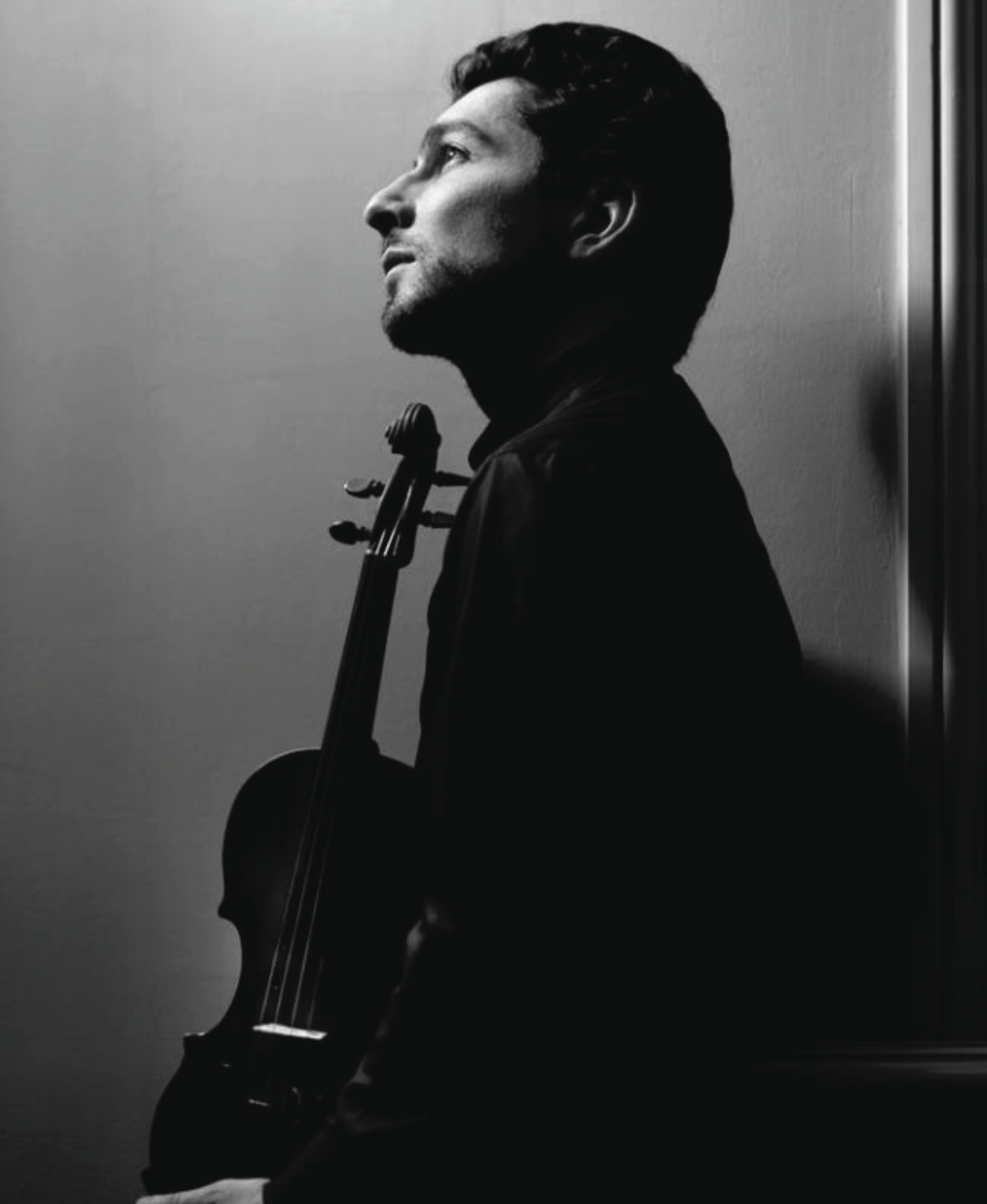
SERGEY KHACHATRYAN
VIOLIN
Born in Yerevan, Armenia, Sergey Khachatrayan is widely regarded as one of the world’s leading violinists. Celebrated for his artistry and sensitivity, he performs regularly with the foremost conductors and orchestras worldwide.
His 2026-27 season includes European performances with Orchestre National de France (Cristian Măcelaru), Bern Sinfonieorchester (Jader Bignamini), Academia Santa Cecilia (Thomas Guggeis), and Luxembourg Philharmonic (Tugan Sokhiev). Building on the success
of recent North American appearances with San Francisco Symphony (David Afkham), Atlanta Symphony Orchestra (Pietari Inkinen), National Symphony Orchestra Washington (Simone Young), and Cleveland Orchestra (Rafael Payare), Sergey returns to the United States to rejoin Payare with San Diego Symphony and Minnesota Orchestra (Hannu Lintu).
Alongside orchestral engagements, Sergey diversifies recital partnerships this season, as he undertakes a Japanese tour with pianist Momo Kodama, performing in Hyogo, Okura, and Hamarikyu, before returning
to Europe with Lusine Khachatrayan for Rencontres Musicales d’Évian and a recital at Amici della Musica di Firenze. He also joins pianist Alexander Kantarow for a recital tour, performing at Accademia Nazionale di Santa Cecilia, Wiener Konzerthaus, Les Grands Interprètes in Toulouse, and Wigmore Hall.
Highlights of the previous seasons include a residency with Orquesta de Valencia, comprising a chamber project and several concerts conducted by Alexander Liebreich, as well as a residency at the BOZAR in Brussels including a pair of recitals and a concert with Orchestre National de Belgique and Hugo Wolff. Re-invitations included RAI National Symphony Orchestra (Kirill Karabits), Accademia Nazionale di Santa Cecilia (Myung-Whun Chung), Frankfurter Museumsorchester (Michael Sanderling), Gävle Symfoniorkester (Case Scaglione), Orchestre de la Suisse Romande (Tugan Sokhiev), Lucerne Symphony Orchestra (Maxim Emelyanychev), and Frankfurt Radio Symphony Orchestra (Alain Altinoglu).
Sergey’s extensive discography includes his latest album, released by Naïve, featuring the first recording of Ysaÿe’s Six Solo Sonatas, Op.27, performed on the composer’s own Guarneri del Gesù violin. Together with Lusine,
he also recorded My Armenia, an album marking the centenary of the Armenian genocide, which received
the Echo Klassik Award for Chamber Music Recording (20th-21st Century/Mixed Ensemble). Further recording highlights include the Sibelius and Khachaturian concerti with Sinfonia Varsovia under Emmanuel Krivine and both Shostakovich concerti with the Orchestre National de France conducted by Kurt Masur, among others.
He became the youngest First Prize winner of the VIII International Jean Sibelius Competition in Helsinki in 2000 and was subsequently awarded First Prize at the Queen Elisabeth Competition in Brussels in 2005. Sergey plays the 1724 Kiesewetter Stradivarius violin on a kind loan from the Stretton Society.
ABOUT THE MUSIC
Violin Concerto in D Minor
ARAM KHACHATURIAN
Born June 6, 1903, Tbilisi
Died May 1, 1978, Moscow
APPROXIMATE PERFORMANCE TIME
37 MINUTES
At its best, Khachaturian’s music grows directly out of his Armenian heritage–his works have a fiercely energetic, almost barbaric quality that has made them a favorite
of audiences around the world. Yet Khachaturian left Armenia fairly early in his life: he moved to Moscow when he was 18, studied there for many years, and eventually made his career in that city. His Armenian past always remained a part of his art, however, and like Bartók he absorbed the musical idiom of his native land so thoroughly that he did not need to quote folktunes; instead he created a musical language that fuses the colorful Armenian (some would say “trans-Caucasian”) idiom with classical forms.
Not surprisingly, Khachaturian had particular success
with music for the stage–his ballet Spartacus has been
a specialty of the Bolshoi Ballet for the last half-century, and the Sabre Dance from his ballet Gayaneh is a classical “hit”–but he also wrote two distinguished concertos: the Piano Concerto of 1936 and the Violin Concerto of 1940. Khachaturian wrote his Violin Concerto specifically for David Oistrakh. The two young men (both still in their thirties) consulted during the course of its composition, and Oistrakh edited the violin part and wrote the cadenza in the first movement. Oistrakh gave the first performance in Moscow on November 16, 1940, and the Violin Concerto has remained one of the most popular violin concertos composed in the twentieth century.
Khachaturian’s Violin Concerto has a very classical shape (sonata-form first movement, variation-form slow movement, and a rondo-like finale), but its impact is wild and exciting. This is music full of blazing colors, primal rhythms, “exotic” melodies, and great blocks of sound. It is also terrific violin music, and we may feel the hand of Oistrakh here: the solo writing is both difficult and brilliant, but it sits sensibly under the hand and plays to the strengths of the violin, wedding virtuosity with lyricism.
The concerto gets off to a fiery beginning (Khachaturian marks the first movement Allegro con fermezza: “with firmness”), and the soloist enters quickly with the propulsive, thrusting main theme. A quiet second subject brings some repose, and Khachaturian builds the long opening movement out of these two quite different ideas. The striking cadenza comes somewhat early in the movement, and finally an exciting coda hurls the music to its close.
The orchestra has a long introduction to the Andante sostenuto, with the music growing out of the dark lower registers of the strings. Eventually the soloist picks up this melody, now marked cantabile espressivo, and embellishes it. The music rises to a great climax, then falls away to the quiet close. The orchestra also introduces the Allegro vivace finale, hammering the fundamental 3/8 meter into our consciousness before the solo violin makes its entrance on the springing and infectious main theme. This movement is full of fire and extroverted brilliance, and that makes some subtle touches along the way all the more surprising. Into
the rush of this finale, Khachaturian brings back the
lyric second theme of the first movement, and as the movement proceeds he combines this theme with the main theme of the finale. The opening movement of the concerto may have been set in D minor, but this finale is in sunlit D Major, and at the end the music hammers its way home on pounding octave Ds.
Symphony No. 9 in D Minor
ANTON BRUCKNER
Born September 4, 1824, Ansfelden
Died October 11, 1896, Vienna
APPROXIMATE PERFORMANCE TIME
63 MINUTES
It cost Anton Bruckner a superhuman effort to compose his Ninth Symphony, and he died before he could complete it. Bruckner was already 63 when he began the Ninth during the summer of 1887, and he worked on it for the final nine years of his life. The composer’s health, was increasingly frail in these years, and the composition of the Ninth was complicated by his setting it aside for long periods to revise his First, Second, Third, and Eighth Symphonies. Still, the huge new symphony gradually took shape. After making sketches for years, Bruckner completed the first movement in December 1893, the second in February 1894, and the third in November 1894, and then he began the finale. By this point the aging composer knew that the Ninth would be his last symphony, and–working desperately–he struggled to finish it. In 1896 Dvořák–recently back from America– came to Vienna and wished to visit Bruckner. Bruckner met Dvořák at the door but–weeping–turned him away, pleading that all his remaining time and energy must
go to finishing the Ninth Symphony. On October 11 he rose and worked on the finale, went for a walk in the gardens that surrounded the house where he was living, returned and lay down, and died suddenly. There have been attempts to complete the finale from Bruckner’s substantial sketches and so bring the Ninth to a full four- movement form, but Bruckner’s Ninth Symphony–in its three-movement form–is so compelling that those three movements form a moving and satisfying symphonic journey by themselves.
Bruckner’s Ninth Symphony is monumental (its three movements span an hour), heartfelt (the composer dedicated it An den liebem Gott: “To dear God”),
and an absolutely radical piece of music, profoundly original in form, harmony, and expression. Bruckner’s lifelong fascination with Beethoven’s Ninth Symphony has often been noted, and that obsession is at its most acute in his final symphony. Both the Beethoven and Bruckner Ninth are in D minor, both begin in a sort of cosmic haze, and out of that uncertain murmur, bits of theme emerge, coalesce, and explode downward into the movement’s opening theme. But Bruckner will take his first movement in directions very different from Beethoven’s sonata-form structure. Bruckner’s marking for his first movement–Feierlich. Misterioso (“Solemn. Mysterious”)–sets the mood exactly. Over a misty, sustained D, distant brass calls and other bits of
theme are heard. Gradually these build to the statement of the first theme, which arrives like a cataclysm: over a powerful timpani roll, the entire orchestra stamps out this titanic idea, and it is as if the heavens have spilt open around us. Then–silence, and a long pizzicato sequence leads to a new episode, begun by a consoling melody in A major sung by the violins. This in turn leads to a third episode, marked Moderato and announced largely by the strings. Listeners should not expect the familiar outlines of sonata form in Bruckner symphonies, and here–in his final symphony–Bruckner’s sense of form is utterly original. Rather than thinking of first and second subjects, listeners would do better to think of three massive theme-groups, each built on a main idea but also full of subordinate ideas. These ideas do not develop in the classical sense, but they return, evolve, intermingle, and grow, and this movement’s long mid- section recalls all three theme-groups. A quiet chorale for winds and then brass leads to the soft timpani roll that introduces the coda. From pianissimo whisperings, bits of the first theme-group gradually build to the mighty brass calls that thrust this movement to its overpowering close.
After such an opening movement, the second might seem more conventional: it is in a classical form (scherzo-and-trio) and relatively brief. Yet the character of this music is far from the boisterous scherzos of Beethoven’s symphonies–there is something hard, dark, savage at the core of this movement. It begins innocently enough, and with a surprising touch: the entire first statement is played by pizzicato strings.
An instant of silence follows, and the whole orchestra erupts with brutal chords that stamp across the music like an invading army. Bruckner offers gentler secondary material, but the menace of those stamping chords
is never far away. The trio takes us into a different world altogether. Bruckner moves into the remote key of F-sharp major, which feels positively sunny in this context. First violins dance up and down along the pulsing 3/8 meter, but the trio passes by in just a few minutes and we are back in the scherzo, which pounds its way to the violent close.
The Adagio was originally to be the symphony’s slow movement, third in the sequence of its four movements, but fate made it instead the symphony’s finale. Bruckner immediately sets out into unexplored territory as first violins make an unearthly upward leap of a ninth. “Slow, solemn” is Bruckner’s marking for this movement, and soon the violins recall the “Dresden Amen,” used by Wagner in Parsifal. This movement too can be thought of as a spiritual journey, and–after some stinging trumpet fanfares–the second subject arrives in the combined violin sections. Bruckner marks this “Very slow,” specifies that it should be “broad,” and keeps it entirely on the violins’ G-string–the warm A-flat major tonality of this theme sounds particularly warm after the movement’s unsettling opening. The return of that opening theme begins what might be called the “development,” though once again Bruckner’s themes do not develop in the manner of the classical nineteenth-century symphony. After some treatment of the second theme-group
the music reaches a radiant A-major chord, almost prayer-like in its calm, and from here onward the atmosphere–the “feel”–of the movement is subtly different. A chorale-like passage gather force and drives the movement to its shrieking, dissonant climax, which breaks off in silence. And from this shattered, shocking moment Bruckner winds down the movement–and
the symphony. At the very end, horns rise up to strike the concluding E-major chord, and the brass sustains that long, golden chord as Bruckner’s final completed movement fades into rapt silence.
THE INEVITABLE NOTE ON TEXTS: Bruckner never heard his Ninth Symphony, and in fact no one heard it until
six years after his death: it was first performed in Vienna on February 11, 1903. But the version performed on that occasion–and for the following thirty years–was not what Bruckner had composed. Working with the best
of motives and the worst of results, Bruckner’s student Ferdinand Löwe had completely revised the manuscript of the three completed movements to make them more palatable to contemporary taste. The effect was not so much to bowdlerize the Ninth Symphony as to de-fang it: Löwe softened Bruckner’s orchestration, excised dissonances that he thought might trouble audiences, and completely removed the savage climax of the third movement. This version was published in 1904, and for decades audiences thought that it was what Bruckner had written. It was not until a side-by-side performance of the Löwe version and Bruckner’s own version in Munich on April 2, 1932, that the full extent of Löwe’s well-intentioned meddling–and the full majesty of Bruckner’s original–became clear.
—Program notes by Eric Bromberger


Comments are turned off
The author has disabled comments for this post